
Your local transcription history: keep, copy, delete
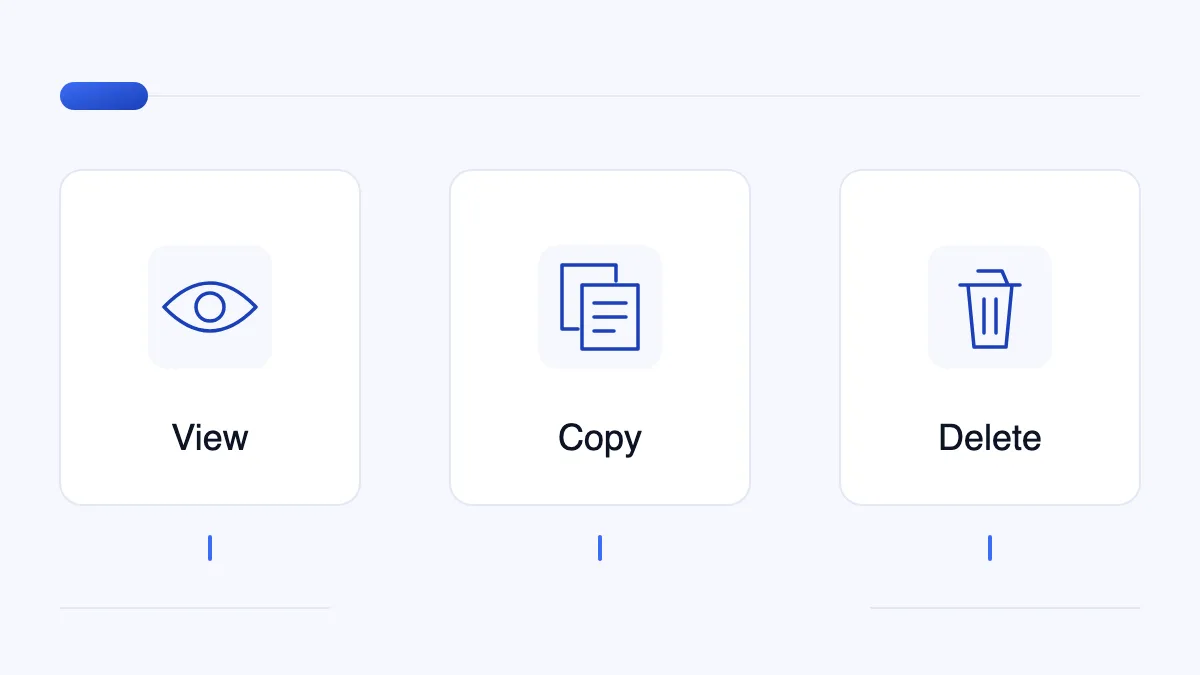
After a dictation session, review what you want to keep. Secretary42 stores past transcriptions locally in SQLite, with options to view, copy or delete them. Make that history entry part of your writing routine rather than ending the session as soon as the paragraph appears. Read the text, decide whether you still want it and choose what to do next before beginning another draft.
Review the text you actually dictated
Secretary42 records only when you start dictation with your hotkey. There is no always-on listening, meeting recording or reminders. What you dictated is kept in local history, which you can delete at any time. Review that history after your exercise, and keep your retention decision about those dictated passages separate from any expectation of automatic meeting notes.
Use the view option to read a past transcription. Compare the words with the passage you intended to write, and decide whether you want to use them again. For a practice session, review even the entry you expect to discard. End with an explicit choice about keeping, copying or deleting it rather than leaving the session unfinished.
Copy with a destination in mind
You can copy a past transcription from local history. Before using that text elsewhere, read it again and choose the destination. Treat the copied passage as a draft for you to review. Secretary42 does not offer AI rewriting or editing, so make any changes to the wording yourself before using it in a message or a document.
Secretary42 itself does not send your dictation anywhere. If you paste the copied text into a cloud app, that app sends it like any typed text. Include the receiving app in the decision about reuse. Check the passage and the intended destination together instead of deciding that a useful history entry is automatically ready to share.
Choose what to retain and what to delete
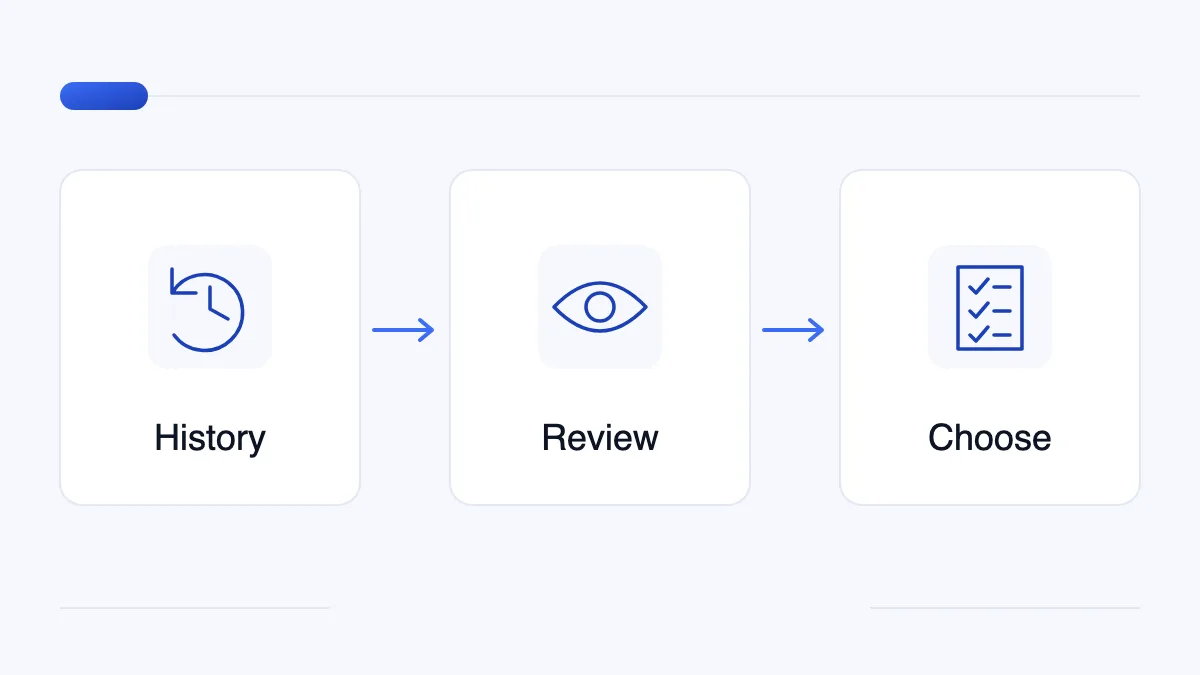
History is stored locally, and you can delete past transcriptions. After a short exercise, decide whether you want to keep the original passage as well as the version you edited. Choose a review point that suits your own routine, such as the end of a draft. Inspect the history entries then and make a deliberate retention decision for each passage.
For confidential or professional material, compare your retention plan and destination with your requirements before using real text. Secretary42 offers no B2B contract or data-processing agreement. Use a harmless passage while you review those limits. Keep the decision about the material separate from the fact that the app provides local history with view, copy and delete options.
Prepare the next dictation deliberately
Secretary42 can paste new text at your cursor or route it to the clipboard or a file. Choose that destination before the next recording, then review the result and the history entry afterwards. Dictation works offline once a model is downloaded and the license is activated. Activation, model downloads and updates need an internet connection, so prepare them before an offline session.
Check the platform requirements: macOS 13 or later on Apple Silicon, or Windows 10 or 11 on x64 with AVX2. For English, Small is the recommended model; German and other languages require Medium or Large v3. Make those choices before your test, and keep the exercise focused on the text and the history decisions you actually intend to use.
Finish the session with a choice
Read the Privacy Notice and the offline dictation guide. Try a harmless paragraph, inspect the history entry and choose whether to keep, copy or delete it. Review the destination again whenever you decide to reuse the text.
Try Secretary42 on your Mac or Windows PC
Secretary42 transcribes your speech on your own device with local Whisper models — no cloud transcription. It runs on macOS 13 or later (Apple Silicon) and Windows 10 or 11 (x64 with AVX2).
€9.99 per month or €99.99 per year. Prices include VAT for EU customers; Paddle shows the final amount before you pay. One subscription covers macOS and Windows, on up to three of your own devices.